Request
Offer
Filter Unit
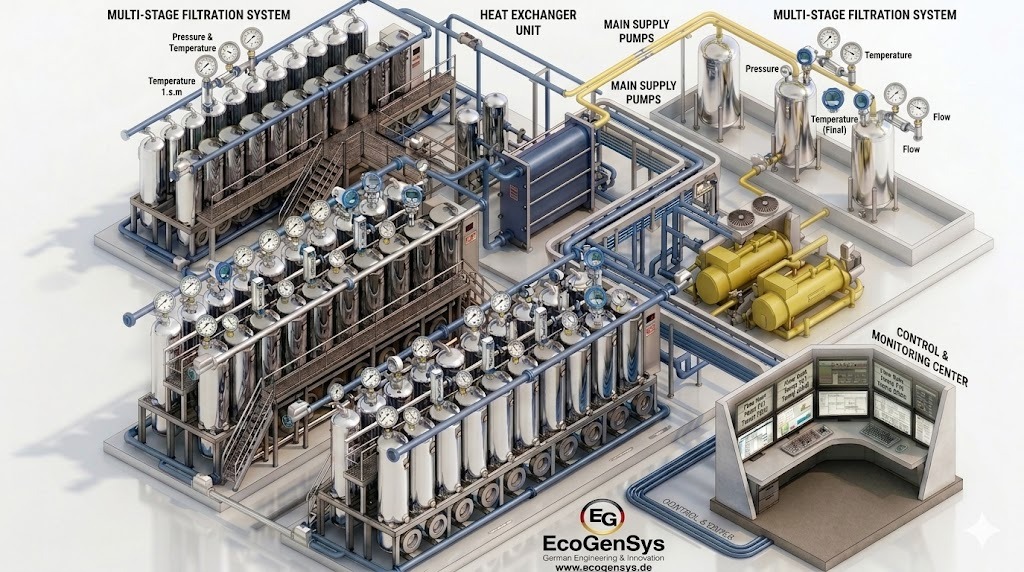
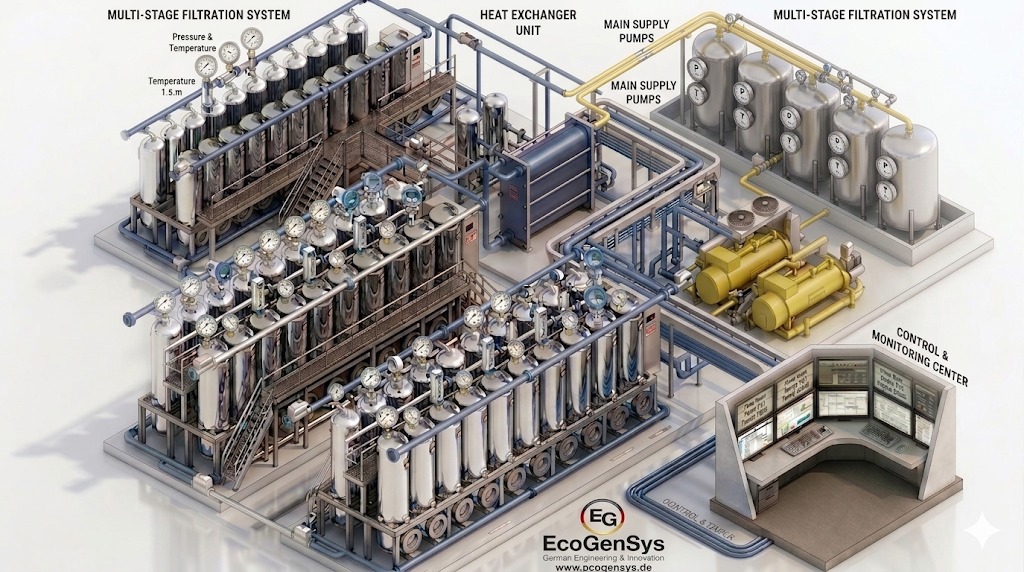
This is a compact industrial filtration unit built around a filter press system, designed to separate solids from liquids in a controlled, high-pressure process. The system pumps a slurry into a series of tightly packed filter plates that create chambers; as pressure is applied, the liquid passes through filter media and is collected as clean filtrate, while solid particles are retained and compressed into a dense “filter cake.” The unit includes supporting components such as pumps, valves, piping, and a control panel to regulate flow, pressure, and automated cycles like filling, pressing, and discharge. Its compact, skid-mounted design makes it suitable for industrial applications such as wastewater treatment, chemical processing, and material recovery, where efficient and repeatable solid-liquid separation is required.
Let Us
Optimize Your Process
Find the right solution for your operation.
Connect with our experts for advanced upgrading, filtration, and gas treatment technologies to improve efficiency, sustainability, and performance.
Contact Us
Deasphaltene – Decoloring-Dewaxing Unit
Solvent DE asphalting is essentially a solvent-based extraction process and the required solvent is usually available within the refinery. The process separates oil from carbon-rich components, resins, and asphaltenes and makes it available to convert it to lube stock or as feedstock for other secondary processing facilities. Feedstock impurities such as sulfur and metals are concentrated in the insoluble phase. The flexibility, inherent in the process, allows wide variation in product quality to meet specific downstream process needs. The process continues to play a significant role, as one of the key process units of the modern refinery complex. Solvent de asphalting processes have not realized their maximum potential. With on-going improvements in energy efficiency, such processes would display its effects in combination with other processes. Solvent deasphalting allows the removal of sulfur and nitrogen compounds as well as metallic constituents by balancing yield with the desired feedstock properties.
Dewaxing processes are designed to remove wax from lubricating oils to give the product good fluidity characteristics at low temperatures (e.g., low pour points) rather than from the whole crude oil, as is the case with deasphalting processes. The feedstock is treated with a solvent such as methyl-ethyl-ketone (MEK) to remove this wax before further processing. The mechanism of solvent dewaxing involves either the separation of wax as a solid that crystallizes from the oil solution at low temperature or the separation of wax as a liquid that is extracted at temperatures above the melting point of the wax through preferential selectivity of the solvent. However, the former mechanism is the usual basis for commercial dewaxing processes. It is the purpose of this chapter to present a general description of the types of processes used for solvent deasphalting to illustrate the evolution and acceptance of these processes in the light of the changing feedstock slate entering a refinery.
Base Oil To Lube Oil
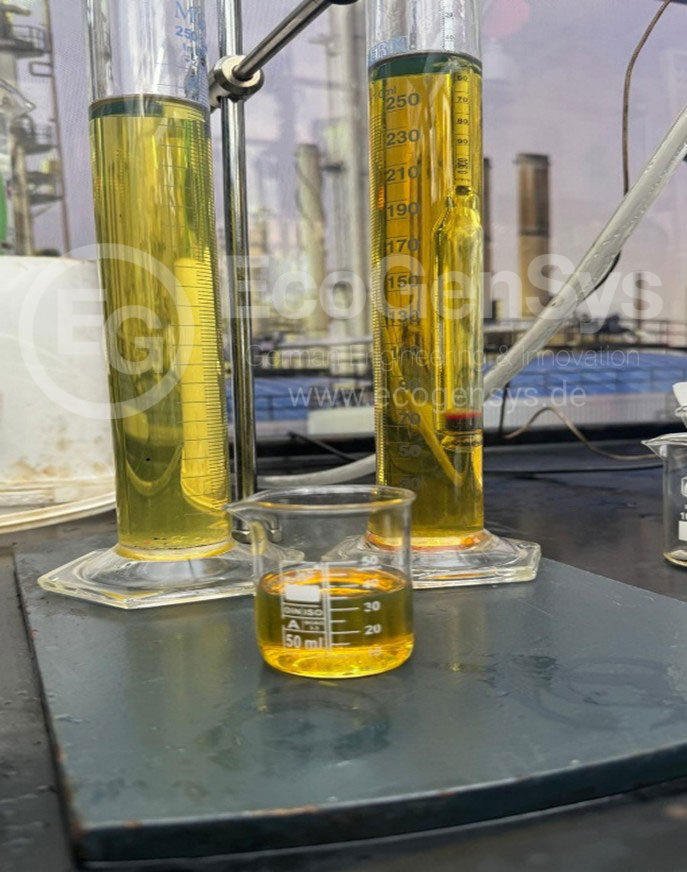
The transformation of base oil into lubricating oil (lube oil) is a fundamental process in the lubricant industry, where refined base stocks are enhanced with additives to achieve specific performance requirements. Base oils are typically produced from crude oil refining or synthesized through chemical processes, and they serve as the primary component of lubricants, making up about 70–90% of the final formulation. Base oils on their own have limited performance characteristics. To produce high-quality lubricating oils, various additives are blended into the base oil. These additives include anti-wear agents, antioxidants, detergents, dispersants, viscosity index improvers, and corrosion inhibitors. Each additive plays a critical role in improving the lubricant’s performance under different operating conditions, such as high temperature, pressure, and contamination. The blending process is carefully controlled to ensure that the final lubricant meets required specifications for viscosity, thermal stability, oxidation resistance, and protection against wear and corrosion. Depending on the application, different formulations are developed, such as engine oils, hydraulic oils, gear oils, and industrial lubricants. Modern lubricant production also considers environmental and efficient factors, including low emissions, extended service life, and energy savings. Advanced base oils, such as synthetic oils, are increasingly used due to their superior performance compared to conventional mineral oils. In summary, the conversion of base oil to lube oil is not a chemical reaction process but a formulation and blending operation that transforms a basic fluid into a high-performance product tailored for specific mechanical and industrial applications.